
All I Know Is Love: Meet Arabella
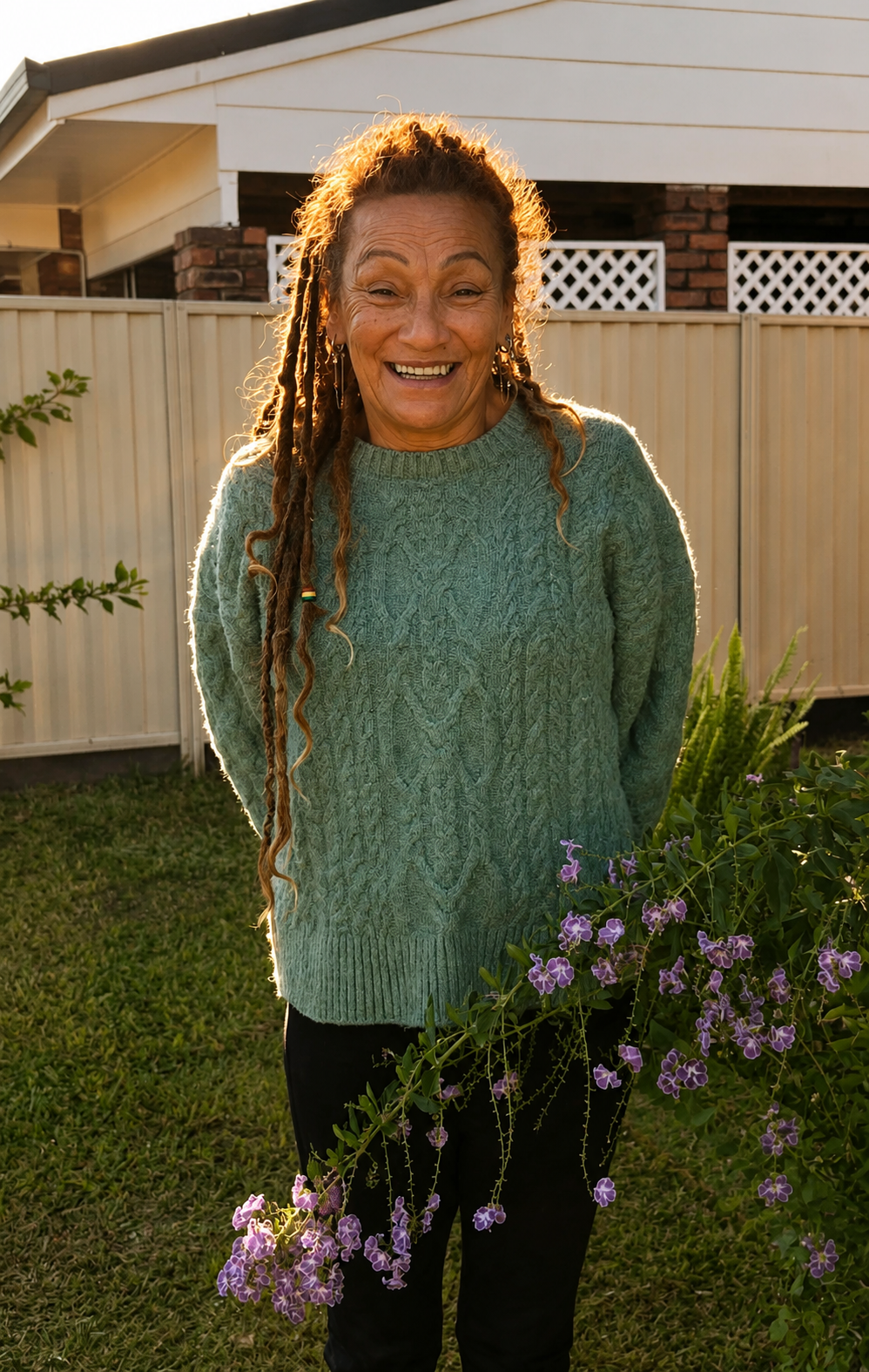
When Arabella talks about the people she meets through Rosies, she speaks about them with a familiarity that comes from lived experience.
She understands addiction. She understands hardship. She understands what it feels like to be written off.
Most importantly, she understands that a person’s circumstances today do not determine who they might become tomorrow.
“You don’t know what can happen for these people,” she said. “You never give up hope.”
It is a belief shaped by her own journey.
Arabella is a proud woman with Eastern Arrernte heritage. Her father’s family came from Central Australia, around Alice Springs and the Country surrounding Uluru. Her father was part of the Stolen Generations, a history that has shaped many Aboriginal families across Australia.
Arabella’s own story took a different path.
She was adopted as a baby and raised by a white family in western Queensland, growing up in Charleville and Augathella surrounded by a large extended family, station life and strong community connections.
“I was brought up in the biggest, widest, most loving family ever,” she said.
As a child, she spent much of her time alongside Bidjara families and friends, learning language, culture and ways of life through the people around her.
Looking back, she reflects on how complex identity can be.
“We’re all very diverse and have had many different lives.”
Today, Arabella speaks openly about the many different experiences Aboriginal people carry and the many ways people connect to culture, community and Country.
Her connection to people has remained a constant throughout her life.
So has storytelling.
Arabella has always loved writing. After completing a Diploma in Freelance Journalism many years ago, she recently returned to study creative writing and has discovered a renewed passion for it.
Currently undertaking a creative writing course, she has been awarded distinctions for her work and dreams of one day writing stories inspired by the people and characters she encounters in Caboolture.
“I’ve just gotten back into creative writing and I absolutely love it.”
But some of the most significant chapters of her own story were far harder to write.
For many years, Arabella battled addiction and experienced periods of homelessness and instability.
Recovery did not happen overnight.
“It was the hardest thing I ever had to do.”
Today, more than 25 years later, she speaks about recovery with gratitude and humility. She credits those experiences with shaping the person she has become and the way she views others.
“You can only keep what we’ve got by giving it away.”
That philosophy eventually led her to Rosies.
After years spent raising her family, including caring for her son Charlie who lives with a disability, Arabella felt a growing desire to reconnect with her community and contribute in a meaningful way.
“I just wanted to get back out and give.”
Now a familiar face at Caboolture outreach, Arabella regularly brings homemade cakes, soft drinks and conversation to share with patrons. She has encouraged friends, family members and local businesses to donate drinks, and is always looking for new ways to support those doing it tough.
To her, these gestures are not extraordinary.
They are simply acts of care.
“As far as I’m concerned, we all should be doing it.”
When Arabella spends time at outreach, she sees more than the challenges people are facing.
She sees potential.
“I used to be one of them.”
She talks warmly about the people she meets through Rosies, describing them as brothers and sisters. She speaks about their resilience, their humour and the respect they show one another.
While some people see homelessness or addiction, Arabella sees human beings with stories, strengths and futures that are still being written.
“I got my first mortgage at 50,” she said.
For her, that achievement is proof that life can change in ways we never expect.
It is why she refuses to give up on people.
It is why she keeps showing up.
When asked what message she would like to share during NAIDOC Week, Arabella’s answer is not complicated.
She hopes people choose kindness.
She hopes people look beyond difference and see one another’s humanity.
“I’d like to see every race step outside their comfort zone and be kind.”
It is a message that sits at the heart of everything she does.
Whether she is writing stories, caring for her family, supporting people at Rosies or sharing a conversation with someone doing it tough, Arabella returns to the same belief.
A belief in community.
A belief in compassion.
A belief that every person deserves dignity, respect and hope.
And when asked what her connection to Country means to her today, she pauses before answering.


